


Ape Warforts
Tap4fun Trident Limited
I approached Ape Warforts as a strategy game that asks a simple but appealing question: what happens when the battlefield itself keeps moving? Its setting is an ape-filled world of mobile fortresses, and that gives the game a more distinctive identity than a standard base-building or battlefield title. After spending time with it, I found the main appeal comes from deciding how to use a fortress that is not just a static home, but part of the conflict.
That moving-fortress idea also makes the game worth discussing from an accessibility point of view. A strategy game can be difficult for reasons that have little to do with the quality of its ideas: crowded screens, unclear priorities, rushed decisions, tiny controls, or too much information arriving at once. My experience with this game is that it is easiest to enjoy when you can comfortably read the battlefield, keep track of several objectives, and accept a progression loop that may ask for repeated attention.
How Ape Warforts feels to read, control, and fit into everyday play
Readability and navigation during fortress battles
The strongest part of the presentation is the central visual concept. A moving fortress gives each decision a clear spatial meaning: where your force is positioned, what it can reach, and how the battlefield changes around it. That is more memorable than simply tapping through a collection of menus. When I was focused on one immediate objective, the theme helped me understand why movement and positioning mattered instead of making every action feel like an isolated button press.
At the same time, strategy games naturally place a lot of information on screen. You may need to distinguish units, targets, resources, upgrades, and alerts while also watching the wider situation. For a player with strong eyesight and plenty of time, this can become part of the fun. For someone who struggles with small text, dense icon layouts, or rapidly changing visual cues, the same design can become tiring quickly.
I would not treat the game as an especially relaxed visual experience. It is better suited to players who are comfortable pausing mentally between decisions and checking several parts of the interface before committing. If you prefer a strategy game that explains one system at a time and keeps the screen extremely quiet, this may feel busy. The ape theme gives the game personality, but personality does not automatically make every piece of information easy to parse.
Related News






One useful habit is to avoid treating every visible notification as equally urgent. I found it more manageable to identify the decision that could affect the next few minutes, deal with that first, and then review secondary information. This is a small change, but it prevents the interface from turning into a checklist that demands constant attention. It is especially helpful for players who find simultaneous alerts distracting.
The game is free to download, which makes trying this visual style relatively easy. It is listed for Everyone, so its broad presentation is not built around mature content. That does not mean every player will find the interface equally comfortable, however. Age suitability and practical accessibility are different questions: a young player may understand the theme while still needing help with reading, planning, or managing the number of choices.
Motor demands, pace, and sensory comfort
From a motor perspective, this is more about repeated touch decisions than about fast reflex performance. The important actions are strategic: selecting, checking, moving, and deciding what deserves investment. That is good news for players who do not enjoy twitch-based games. You do not need the same kind of rapid physical response that an action game often demands.
Gallery
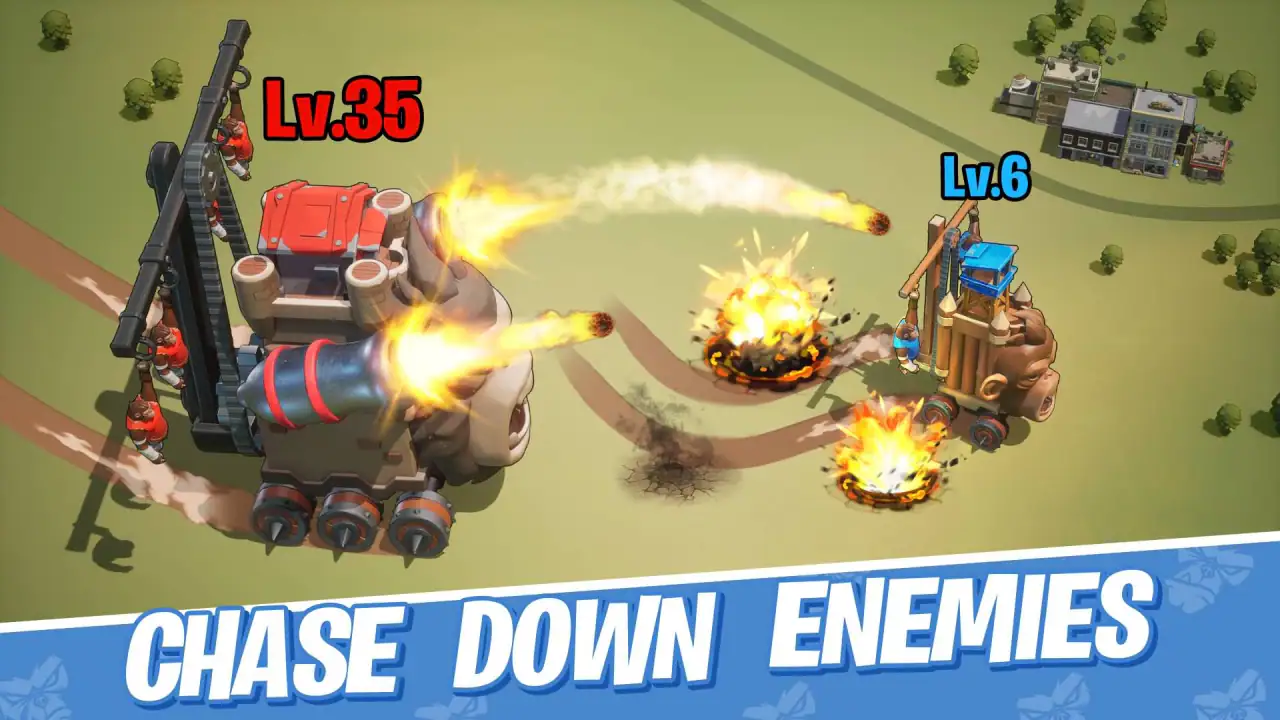
However, fewer reflex requirements do not make a game effortless for every hand. Repeated tapping, accurate selection of small interface elements, and moving between information panels can still be uncomfortable for someone with limited dexterity, tremors, joint pain, or fatigue. I would approach it in shorter sessions if extended touch interaction causes strain. A stylus or a larger device may make selection easier for some people, although that depends on personal comfort and device setup.
The most accessible way to play is to turn the game into a planning exercise rather than a race. Before acting, I would scan the fortress situation, decide on one priority, and then perform the related actions together. This reduces unnecessary back-and-forth tapping and makes mistakes less likely. It is a practical workflow, not a special mode, but it changes how demanding the game feels.
Sensory comfort is more difficult to judge in a strategy game because the pressure often comes from accumulation. Movement, combat information, progress prompts, and visual effects can compete for attention even when no single element is overwhelming. Players who are sensitive to motion, flashing elements, or layered sound should test the game cautiously and take breaks when the screen begins to feel tiring.
I also think this is a game where personal audio preferences matter. Some players enjoy sound as feedback, while others concentrate better in silence or with their own background audio. If you are sensitive to repeated effects, playing in a quieter setup may help you focus on the tactical layer. I would not choose this title specifically for a calm, low-stimulation experience; its appeal comes from an active battlefield rather than a minimalist presentation.
Why the moving fortress changes the strategy
The mobile-fortress premise is not just decoration. It changes the way I think about risk. In a conventional strategy game, a base often feels like a fixed anchor: you build around it, defend it, and return to it. Here, the fortress itself encourages a more mobile mindset. You have to consider not only what you can build or attack, but also how your position affects the next decision.
That creates an important trade-off for players who like careful planning. A detailed plan can be satisfying, but a moving battlefield may punish overcommitting to one route or one objective. I found it more useful to keep a primary goal and a fallback option instead of trying to predict everything. This is one of the game’s less obvious lessons: flexibility is often more valuable than a perfect opening plan.
Another practical tip is to treat movement as a resource in your thinking, even before you treat it as an in-game action. Ask what a move gives you, what it exposes, and whether it makes the following choice simpler or more complicated. That mindset helps prevent the common mistake of moving simply because movement is available. It also makes the game more approachable for players who become overwhelmed by too many possible actions.
The strategy category is crowded with games that focus on fixed settlements, familiar armies, or straightforward territory expansion. Ape Warforts stands apart through its fortress concept and ape-world setting. If you want a standard city builder with a predictable layout, another game may be a better fit. If you enjoy learning a system through positioning and changing circumstances, this one has a clearer reason to exist.
Situational access: short sessions, shared devices, and different players
I can imagine playing it in several everyday situations, but not all of them suit the same kind of player. On a commute or during a short break, the game can work when you have enough uninterrupted time to understand what is happening. A strategy decision is more satisfying when you can finish the thought instead of closing the game halfway through an important sequence.
For that reason, I would not recommend starting a complicated session while distracted, walking, or switching constantly between tasks. The moving-fortress idea rewards attention. If you are looking for something to tap casually with half your mind elsewhere, a simpler puzzle or idle game will probably serve you better.
In a realistic evening scenario, I would play after deciding on a limited goal: improve one part of the fortress, resolve one conflict, or review the next route. That boundary keeps the session from becoming an open-ended series of small upgrades. It also helps players who have difficulty stopping once progress systems begin offering another task. The game is easier to fit into daily life when you choose the length and purpose of the session before opening it.
It may also suit households where different people share a compatible device, provided each person is comfortable with the same account and control arrangement. The game’s Everyone rating makes the theme broadly approachable, but younger players may still benefit from an adult explaining the strategic choices. The challenge is not necessarily the subject matter; it is understanding why one action is better than another and resisting the temptation to spend resources immediately.
The game runs on Android devices using version 8.0 or later, which gives it a reasonably broad technical starting point for Android users. Still, operating-system compatibility does not guarantee that every screen size, performance level, or touch setup will feel equally good. On a smaller display, dense strategy information can be harder to inspect. On older hardware, longer sessions may be less comfortable if the device becomes warm or the game feels less responsive.
Progression, spending, and the attention barrier
One of the biggest practical questions is not whether the game is free, but how its free structure fits your habits. Optional purchases range from $0.99 to $99.99 per item. That wide span matters because it places the game in a category where spending can become part of the progression conversation, even if a player begins without paying.
I recommend deciding your personal boundary before you become invested in the fortress. If you are comfortable playing slowly and treating progress as something earned over time, the free entry point is useful. If you dislike seeing expensive purchase options or feel pressure to accelerate development, the monetization model may become a larger obstacle than the strategy itself.
This is also relevant for younger players. The Everyone rating describes the content audience, not financial independence. Anyone sharing a device with children should establish purchase rules in advance. That is a simple but important part of making the game fit a family context.
The current version is 0.91.0, which suggests the experience is still in an early stage of its version history. I would keep that in mind when judging polish and long-term stability. An early version can be exciting because the design may still feel fresh, but it can also mean that some systems are being refined over time. Players who expect the completeness of a long-established strategy game may want to approach it with patience.
The game has an average rating of 4.5 from around 7,400 ratings, with more than 300 written reviews, and it has passed 100,000 installs. Those figures show that it has attracted a meaningful early audience, but they should not replace your own priorities. A popular strategy game can still be wrong for someone who needs large text, low stimulation, minimal tapping, or a completely purchase-free environment.
Remaining barriers I noticed
The first barrier is information density. Strategy depends on information, but the player should not have to work too hard to determine what matters now. If you have dyslexia, reduced vision, attention difficulties, or simply limited mental energy after a long day, the number of competing elements may make the opening feel less welcoming than the colorful setting suggests.
The second barrier is the absence of a truly effortless play style. Even when you are not making rapid decisions, you still need to remember objectives, compare options, and understand consequences. Players who want a game that can be enjoyed entirely through repetition may find the moving-fortress structure demanding. It asks you to stay mentally present.
The third is touch precision over time. A single selection is unlikely to be a problem for most players, but repeated navigation can become uncomfortable when hands are tired or movement is limited. My practical solution is to use deliberate taps, avoid unnecessary menu visits, and stop before discomfort becomes part of the session. That will not solve every motor barrier, but it can reduce avoidable strain.
There is also a learning barrier for people unfamiliar with strategy games. The theme is easy to understand, but the best decisions may not be obvious immediately. I would recommend that new players resist spending every available resource as soon as it appears. Save enough flexibility to respond to the next situation, because the fortress’s movement makes rigid early choices less reliable than they might be in a static base game.
Players who need explicit accessibility controls should investigate the game directly on their device before committing to long sessions. I would not assume that a broad age rating means support for every visual, motor, auditory, or cognitive need. The fairest conclusion is that the game can be approachable through careful pacing, but it is not automatically accessible simply because its premise is playful.
Who should play it, and who should choose another strategy game?
I would recommend Ape Warforts to someone who likes strategy with a strong central gimmick and enjoys adjusting plans as circumstances change. It is particularly appealing if the idea of commanding a mobile base sounds more interesting than building a permanent settlement. The ape-world presentation adds charm, while the fortress concept gives the game a tactical identity that is easy to describe to a friend.
I would be more cautious recommending it to players who want a quiet, highly predictable experience. It is also not my first choice for anyone who is very sensitive to interface clutter, repeated touch input, or monetization that includes high-priced individual items. In those cases, a slower turn-based game with a cleaner interface, or a premium strategy title without purchase prompts, may be a better match.
Compared with a typical city-building game, this title seems more concerned with movement and immediate positioning than with making one permanent location perfect. Compared with a traditional tactics game, its fortress theme gives the broader setting more importance. The trade-off is that players seeking deep, carefully measured battles may prefer a game built entirely around turn-by-turn combat, while players seeking a relaxed construction loop may prefer a fixed-base alternative.
My inclusive verdict after playing
The best way to approach Ape Warforts is as a flexible strategy game, not as a frictionless casual tapper. Its free entry, Everyone rating, and unusual moving-fortress premise make it easy to try, while its early version status and purchase range mean that expectations matter. I enjoyed the way the setting encourages movement-based thinking, and I found that deliberate planning made the experience much more comfortable.
For accessibility, the game’s strengths are its strategic rather than reflex-heavy core, its recognizable visual premise, and the ability to create your own pace through shorter, goal-focused sessions. Its weaker points are the likely demands of dense information, repeated touch navigation, sustained concentration, and a progression model that may not suit players who want to avoid spending pressure entirely.
My final recommendation is conditional but positive. If you can read the interface comfortably, manage touch controls without strain, and enjoy adapting a plan around a moving fortress, it is a worthwhile strategy game to test. If you need large, highly simplified presentation or a guaranteed low-stimulation experience, I would choose a more specialized alternative. For everyone else, I would start slowly, set a session limit, protect your resources, and judge the game by how well its unusual battlefield fits the way you actually like to play.
FAQs for Ape Warforts
What is Ape Warforts?
Ape Warforts is a strategy-focused mobile game built around combat, base development, and competition between players. You typically manage resources, improve your warfort, recruit or upgrade units, and plan attacks against rival forces. Progress depends on balancing construction, research, troop management, and battlefield decisions rather than simply tapping through missions.
Is Ape Warforts free to download and play?
Ape Warforts can generally be downloaded and played without an upfront purchase, although the game may include optional in-app purchases. These purchases can provide resources, speed up upgrades, or offer special bundles. You can usually make progress without paying, but free players may need more patience because timers, resource limits, and competitive progression can become more noticeable later.
Does Ape Warforts require an internet connection?
An internet connection is normally required for Ape Warforts because its main features depend on online services, including account progression, events, rankings, updates, and interactions with other players. Before installing, make sure your connection is stable, especially when participating in battles or claiming rewards. Offline play may be limited or unavailable, depending on the version and current server requirements.
Is Ape Warforts suitable for children?
Ape Warforts may be accessible to younger players, but parents should review its content rating and purchase settings before allowing installation. Strategy games of this type can include cartoon combat, competitive chat or social features, advertisements, and optional spending. It is advisable to activate parental controls and disable unauthorized in-app purchases if children will be playing on the device.
What should I know before starting Ape Warforts?
New players should expect a gradual progression system in which early decisions affect later development. Focus on upgrading essential buildings, protecting and managing resources, and strengthening a balanced force instead of spending everything immediately. Joining an active alliance or community can also be useful, since cooperation, shared rewards, and coordinated attacks may become important as the game grows more competitive.
Pros
- Fast-paced battles make short play sessions enjoyable.
- Base-building offers clear long-term progression goals.
- Multiple troop types encourage varied attack strategies.
- Alliance features add cooperation and competitive social play.
- Colorful visuals make the battlefield easy to read on mobile screens.
Cons
- Upgrade timers can slow progress without frequent play or spending.
- The combat system may feel repetitive after extended sessions.
- New players may struggle against stronger
- established opponents.
- A stable internet connection is required for most features.
- Frequent notifications can become distracting if not adjusted.


